
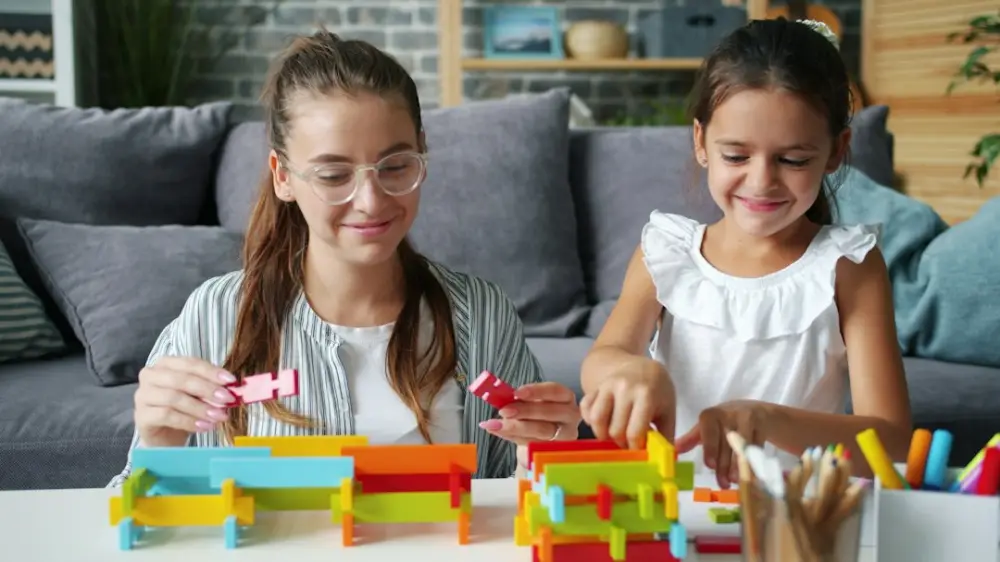
Creative building and tinkering is a hands-on learning process where individuals explore materials and tools without a predetermined outcome. Through open-ended play, tinkerers experiment, fail, and iterate, developing critical problem-solving skills and spatial awareness. It emphasizes the journey of discovery and invention over the creation of a specific, finished product.
Establishing a space for this activity allows children to move beyond passive consumption. Instead of following a manual to build a single model, they learn to see raw materials—like cardboard, sensors, or copper tape—as components for their own ideas. This mindset shifts the focus from "getting it right" to "seeing what happens," which is essential for developing a resilient, creative mind.
Tinkering is often distinguished from traditional crafting by its focus on functionality and experimentation. In a craft project, a child might follow steps to make a paper plate look like a lion. In a tinkering session, that same child might use the paper plate as a structural base for a spinning top or a component in a marble run. This process is supported by interactive learning tools that make education more about the "how" and "why" rather than just the "what."
How Open-Ended Play Drives Discovery
When a child engages in open-ended play, they are essentially performing the work of an engineer or a scientist, but through the lens of play. Without the pressure of a "correct" final result, the fear of failure diminishes. If a tower of wooden blocks falls, it is not a mistake; it is data. The child observes why it fell—perhaps the base was too narrow or the weight was uneven—and adjusts their next attempt accordingly.
This iterative cycle is the engine of discovery. It encourages children to ask "What if?" questions. What if I use more tape? What if I add a counterweight? This type of thinking is deeply rooted in constructionism, a learning theory suggesting that people learn most effectively when they are making tangible objects in the real world.
Consider the example of a child building a simple circuit. Given a battery, a light bulb, and some aluminum foil, they might initially struggle to make the bulb glow. Through tinkering, they discover that the foil must touch both ends of the battery. This discovery, made through direct interaction, is far more memorable than reading about electrical paths in a textbook.
Essential Supplies for a Home Tinkerspace
You do not need an expensive lab to encourage tinkering; a well-stocked corner of a room with organized "junk" is often more effective. The goal is to provide a variety of materials that can be combined in unexpected ways. Categorizing these supplies helps children navigate their own creative process.
- Connectors: Masking tape, duct tape, hot glue guns (with supervision), binder clips, zip ties, and pipe cleaners. These allow for quick modifications.
- Structural Materials: Corrugated cardboard, plastic bottles, egg cartons, PVC pipe scraps, and wooden dowels.
- Movement and Mechanics: Rubber bands, marbles, old CDs for wheels, pulleys, and string.
- Basic Electronics: LED diodes, coin cell batteries, copper tape, and small DC motors.
- Tools: Safety goggles, cardboard cutters, wire strippers, and pliers.
By keeping these items in transparent bins, the materials themselves become invitations to play. A bin of springs and magnets might spark an interest in magnetism, while a stack of cardboard tubes might lead to the construction of a complex pneumatic system using balloons and air.
Starting Projects and Recording the Process
Sometimes a blank slate is intimidating. To jumpstart a session, you can provide a "design challenge" that is broad enough to allow for multiple solutions. For example, ask a child to build something that can move a ping-pong ball across the room without using their hands. Whether they build a catapult, a ramp, or a wind-powered car, the learning happens in the design phase.
Recording the process is just as important as the building itself. Tinkering is often messy and temporary, so capturing the evolution of an idea helps children reflect on their growth. You can facilitate this by:
- Keeping a Tinkering Journal: Encourage kids to sketch their ideas before they build and note what didn't work afterward.
- Photo Documentation: Take pictures of "Version 1.0," "Version 2.0," and so on. Seeing the progression builds confidence.
- Video Demonstrations: Have the child record a "commercial" or an explanation of how their invention works. This reinforces their understanding of the mechanics involved.
Recording these moments turns a fleeting afternoon activity into a portfolio of creative thinking. It shifts the value from the physical object—which might be recycled the next day—to the intellectual journey the child took to create it.
How to Talk with Kids About Their Creations
The way adults interact with a child during tinkering can either expand or shut down the creative flow. Avoid the temptation to "fix" their projects or point out why something won't work before they have tried it. Instead, act as a collaborator or an interested observer.
Use "I notice" statements to spark conversation. Instead of saying, "That’s a great robot," try saying, "I notice you used three different types of tape to hold that arm on. Which one is holding up the best?" This directs the child’s attention back to their own choices and encourages them to evaluate their work objectively. Questions like "What was the hardest part to build?" or "If you had a motor, where would you put it?" help children think about future iterations and technical challenges.
This approach is supported by research from institutions like the MIT Media Lab, which emphasizes the importance of "hard fun"—the idea that children are most engaged when they are challenged to solve difficult problems that matter to them personally.
From Tinkering to Robotics: The Next Step
As children become comfortable with static builds, they naturally begin to look for ways to add life to their creations. This is the bridge between simple tinkering and formal robotics. Adding a single motor to a cardboard creature or using a sensor to trigger a light transforms a physical model into an interactive system. This transition introduces concepts of logic, sequencing, and power management without losing the playful spirit of the initial build.
Moving into this phase requires tools that are approachable but powerful. It is about finding a balance between physical construction and digital logic. When children see that they can control the physical world through code or circuitry, their perspective on technology changes from being a consumer to being a creator. This is the core philosophy behind ovobots: the future of engaging, hands-on learning, where the goal is to make complex concepts accessible through tactile interaction.
At Ovobots, we believe that the best way to prepare children for a high-tech future is to give them the freedom to get their hands dirty today. By fostering a culture of creative building and tinkering, we help kids develop the curiosity and resilience they need to navigate an ever-changing world. Whether they are stacking cardboard or programming their first robot, the skills they gain through open-ended play on this site and in their own homes will serve them for a lifetime.