
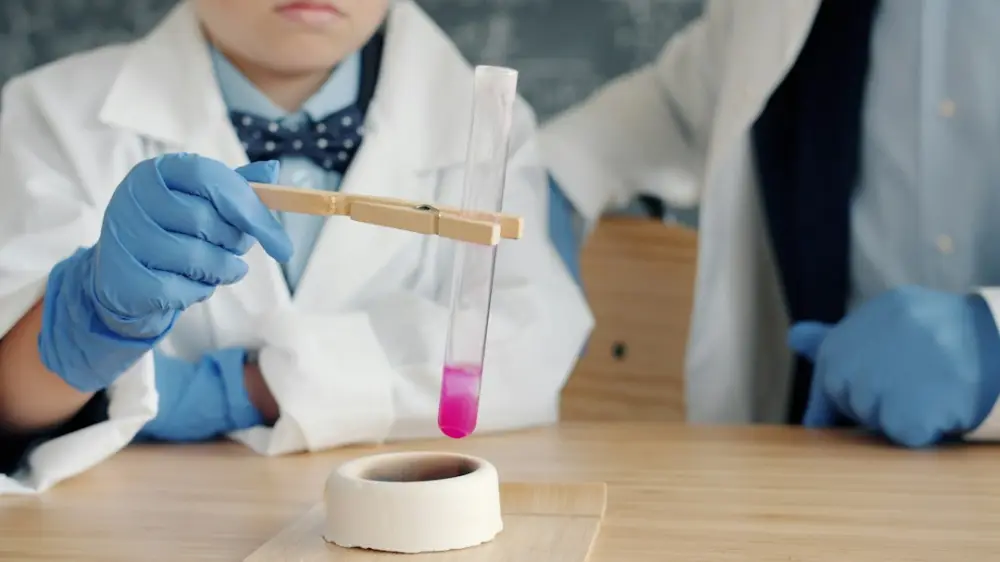
Play-based STEM activities are hands-on learning experiences that integrate science, technology, engineering, and math into a child's natural playtime. Instead of formal instruction, these activities encourage curiosity, problem-solving, and experimentation through exploration. By using everyday materials, children develop critical thinking skills while engaging in creative tasks like building, sorting, or observing natural phenomena.
To implement these activities effectively, focus on providing a designated space with loose parts—such as cardboard, magnets, or water—allowing the child to lead the discovery process. This shift from passive consumption to active making helps bridge the gap between abstract concepts and the physical world, ensuring that learning remains a joyful, low-pressure experience for both the child and the caregiver.
The Basics of Play-Based STEM Learning
At its most practical level, play-based STEM is about removing the barriers between "school subjects" and the real world. When a child balances a series of wooden blocks to create a cantilever, they are practicing engineering. When they notice that a shadow grows longer as the sun sets, they are engaging in scientific observation. This approach relies on inquiry-based learning, where the adult acts as a facilitator rather than a lecturer.
The core components of this method involve four distinct but overlapping pillars. Science is explored through sensory play and observation of the natural world. Technology is introduced as a tool—not necessarily a screen—that helps solve a problem, such as using a pulley or a magnifying glass. Engineering involves the design and construction of structures, while Math is found in the patterns, measurements, and shapes that appear during play. By treating these as interconnected tools for exploration, children learn to see the world through a lens of curiosity.
Why Hands-On STEM is Vital for Early Development
Tactile engagement is a primary way young children process information. Research from institutions like the National Association for the Education of Young Children suggests that hands-on experiences help build neural pathways that abstract teaching simply cannot. When a child physically manipulates objects, they are developing fine motor skills and spatial awareness alongside cognitive logic.
Resilience is another critical byproduct of hands-on STEM. In a traditional classroom setting, a wrong answer can feel like a finality. In a play-based environment, a collapsed bridge or a failed experiment is merely data for the next attempt. This iterative process teaches children that failure is a necessary step in problem-solving. By focusing on the journey of discovery rather than a specific finished product, children remain engaged longer and are more likely to take the creative risks necessary for innovation in 2026 and beyond.
Simple Ways to Incorporate STEM into Daily Play
You do not need expensive kits or specialized laboratories to foster a STEM-rich environment. Many of the most effective activities utilize common household items. For example, a kitchen sink becomes a laboratory for volume and buoyancy experiments. A backyard or a local park serves as a biology lab where children can categorize different leaf shapes or observe the movement of insects.
When children engage in creative building and tinkering through open-ended play, they are testing hypotheses about how the world works. You can encourage this by asking "What if?" questions. If a child is building a ramp for a toy car, ask, "What if we make the ramp steeper?" or "What if we change the surface to something bumpy?" This prompts the child to predict an outcome and then test it, which is the foundation of the scientific method.
Sorting and categorizing are also essential math skills that fit naturally into daily routines. Asking a child to help sort laundry by color or size, or to organize a toy bin by material type, introduces them to sets and logic. These tasks are practical, helpful, and reinforce the idea that math is a useful tool for organizing our environment.
Creative Activity Ideas for Science and Math Exploration
Specific, structured activities can help kickstart a child's interest if they seem stuck. One classic example is the "Sink or Float" challenge. Fill a large container with water and gather various objects from around the house—a cork, a metal spoon, a plastic toy, a stone. Before dropping each item in, have the child predict what will happen. This simple exercise introduces density and buoyancy while making the child the lead investigator.
For math exploration, try "Geometric Snacking." Use crackers, cheese slices, or fruit pieces cut into different shapes. Ask the child to build a larger square out of smaller triangles or to create a repeating pattern with different colors of grapes. This makes the concept of geometry and sequencing tangible and, quite literally, digestible.
Engineering can be explored through a "Paper Bridge Challenge." Give the child two stacks of books and a single sheet of paper. Ask them to find a way to make the paper support a small toy car across the gap between the books. They will likely discover that folding the paper into an accordion shape or a tube increases its strength—a fundamental lesson in structural engineering. These activities require zero specialized equipment but provide deep insights into physical laws.
From Physical Blocks to Digital Logic: The Future of Play
As children grow more confident with physical materials, the transition to digital logic becomes a natural next step. In 2026, the boundary between physical toys and digital interfaces is increasingly fluid. Moving from wooden blocks to modular electronics or programmable devices allows children to see how their physical inputs can create digital outputs. This progression is essential for digital literacy, ensuring children understand that technology is something they can control and create, rather than just consume.
As children grow, these physical experiences provide the foundation for more complex tools, such as educational robotics for children: a guide to how logic and physical movement intersect. Understanding the "if-then" logic of a simple robot is much easier when a child has already spent years understanding the "if-then" logic of gravity and balance. This integrated approach ensures that as they move into more technical subjects, they retain the curiosity and playfulness that first sparked their interest.
At Ovobots, we believe that the best learning happens when children are given the space to be curious and the tools to explore their ideas. By prioritizing community and interactive discovery over isolated screen time, we help families turn their homes into vibrant centers of learning. Whether through simple kitchen science or more advanced interactive tools, the goal remains the same: keeping children curious, engaged, and ready to solve the challenges of tomorrow.